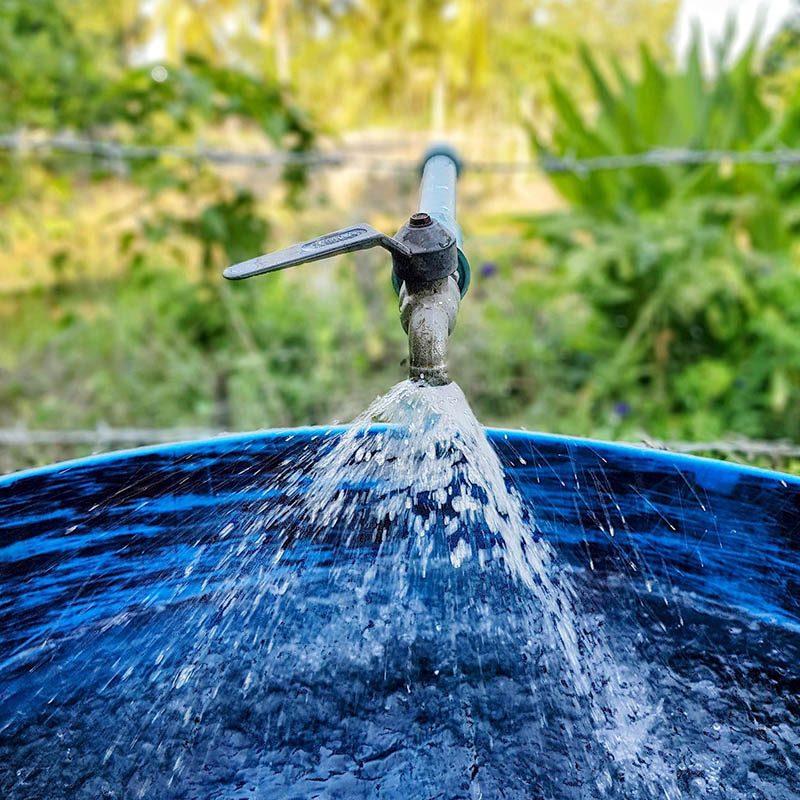
The difference between the four-point mouth and the six-point mouth of the washing machine faucet
2024-09-20

As an indispensable household appliance in modern families, the installation and use of the washing machine are often easily overlooked. Among them, the mouth shape of the washing machine faucet is the key factor that many people need to pay attention to when installing. There are two common washing machine faucets on the market: the four-point mouth and the six-point mouth. What is the significance of their existence?
The four-point mouth and the six-point mouth are terms used to describe the diameter specifications of the faucet outlet. Among them, "four-point" and "six-point" refer to 1/4 inch and 3/8 inch in the imperial unit. In terms of specific specifications, the diameter of the four-point mouth is about 0.8cm, while the diameter of the six-point mouth is about 1.2cm.
The following are the two major differences between the four-point mouth and the six-point mouth.
The first point: is the flow rate. Since the diameter of the six-point mouth is larger, its flow rate is relatively large, which can meet the water requirements of washing machines with large flow requirements. The four-point mouth is suitable for small equipment or low flow requirements due to its small diameter.
The second point: is equipment installation. The size of the six-point mouth is slightly larger, which may require more stringent interface design and equipment size adjustment when installing the equipment. For washing machines, it is required that there must be good connectivity and stability between the washing machine and the pipe, and the six-point mouth makes it easier to achieve this effect. The four-point mouth can provide a more flexible installation method due to its smaller size.
So why do washing machines use faucets of different mouths?
The first is to adapt to different types of washing machines. According to the model and design of the washing machine, different washing machines require different flow rates to ensure the washing and rinsing effects. The four-point washing machine faucet is suitable for some low-flow requirements or compact washing machines. The six-point washing machine faucet can meet the needs of some high-power and high-efficiency washing machines.
The second point is to meet the water pressure requirements of different regions. The water pressure and water consumption in different regions are different, so the use of faucets with different mouths can better adapt to the water pressure conditions in different regions and ensure the normal use of the washing machine.
So how do we choose the appropriate washing machine faucet mouth?
First, choose according to the washing machine model. When buying a washing machine, you can refer to the washing machine's instruction manual or ask the salesperson to find out what kind of faucet the model washing machine needs. Generally speaking, large, high-power washing machines are more suitable for six-point faucets. Small, low-power washing machines are more suitable for four-point faucets.
Second, consider regional water demand. In addition to selecting the mouth type according to the washing machine model, local water habits and water consumption should also be considered. In areas with large water consumption, six-point faucets with larger flow rates can be selected to ensure the normal water demand of the washing machine.
Third, confirm the water circuit design. Before installing the washing machine, carefully check whether the water circuit design and installation space meet the installation requirements of the selected mouth-type faucet. In special cases, such as when the interface is too small or too complicated, professional modification or customization is required to meet the installation requirements.
In general, the main difference between the four-point and six-point faucets of washing machine faucets lies in the different flow rates and installation methods. Choosing the right mouth type requires comprehensive consideration of multiple factors such as the model of the washing machine, water consumption, and water circuit design. In the selection process, attention should be paid to purchasing according to demand and confirming the compatibility of the interface design. This can not only meet the water demand of the washing machine but also ensure a safe and stable use experience.
What to do if the faucet is slow to discharge water?
Why does white water flow out of the tap?